

Table of Contents
Yellowstone National Park is a place for adventure, exploration, hiking, wildlife, and inspiration. Yellowstone is without a doubt one of the most fascinating places not just in the United States of America, but in the world!
Millions of people flock to this enormous expansive wilderness in Northwestern Wyoming, and each one of them does so with good reason. Yellowstone has natural wonders you can’t find anywhere else.
What national wonders? We are talking geysers that go off ‘faithfully’ ON CUE. Other geysers that were painted vibrant colors as if with watercolors. Bubbling hot springs. Mountainous hikes with 360 degree panoramas that make you feel so powerful but so small at the same time.
And the wildlife. OH MY the wildlife. Bison, elk, bears, moose, wolves, pronghorn, coyotes, osprey, so-many-other-things-I-don’t-know-the-name-of. The wildlife will leave you sitting in awestruck wonder, watching Mother Nature’s beauty unfold in front of your very face.
-

Black bear spotting at Yellowstone National Park in Wyoming! -
Coyote spotting at Yellowstone National Park in Wyoming! -

Buffalo spotting at Yellowstone National Park in Wyoming!


We found 5 days to be a perfect amount of time to explore all of Yellowstone National Park. Of course, with a place the size of Yellowstone, you cannot cover every inch in a work week. You CAN see a WIDE variety of incredible sites, sounds, wildlife, mountains, valleys, geysers, springs, and much much more!
This 5 day itinerary is perfect for anyone looking to get a full Yellowstone experience and have the time of their lives doing it. Also, we make pit stops in Montana AND Idaho, so you’ll be able to spend time in 3 of the most beautiful states in the entire USA!
-
Yellowstone National Park Wyoming -
Yellowstone National Park Wyoming -
Yellowstone National Park Wyoming


Now, without further ado, let’s get cracking on our Yellowstone adventure!
Day 1
On Day 1 we are starting at the very South end of the park! Many people come to Jackson when they visit Yellowstone, and drive up from there, so that’s how we recommend it!
Note: if you are coming from the North, East, or West, we’d recommend moving these days around accordingly. Each Day includes a map, so just start with the day that has the entrance you are coming from!
Driving through the South Entrance on your first day in Yellowstone, you’ll no doubt be hungry for adventure! There are a few stops and overlooks on the drive you can and should stop at, especially if you’re sick of driving…
The first main stop we recommend is going to be at the West Thumb of Yellowstone Lake! Here you’ll find the West Thumb Geyser Basin, an absolute ‘must’.
West Thumb Geyser Basin
West Thumb Geyser Basin is a huge boardwalk area that takes you through over 80 (EIGHTY!) different geysers and Hot Spring pools. The geysers and pools range in color from red to green to blue to white, and each one is bubbling to the surface from the steam heat beneath it.
-

View of West Thumb Geyser Basin from the boardwalk in Yellowstone National Park, Wyoming -
View of West Thumb Geyser Basin from the boardwalk in Yellowstone National Park, Wyoming -

Up close photo of a geyser in West Thumb Geyser Basin from the boardwalk in Yellowstone National Park, Wyoming -
View of West Thumb Geyser Basin from the boardwalk in Yellowstone National Park, Wyoming -
View of West Thumb Geyser Basin from the boardwalk in Yellowstone National Park, Wyoming -
View of West Thumb Geyser Basin from the boardwalk in Yellowstone National Park, Wyoming -
View of West Thumb Geyser Basin from the boardwalk in Yellowstone National Park, Wyoming


While here you will see such awesome geysers as Fishing Cone Geyser, Bluebell pool, and the Black pool, our personal favorite. Whoever named the black pool must’ve been high on something or colorblind because it is most definitely bright blue.
-
Black Pool geyser showing off its bright blue color at, West Thumb Geyser Basin in Yellowstone National Park, Wyoming! -
Black Pool geyser showing off its bright blue color at, West Thumb Geyser Basin in Yellowstone National Park, Wyoming!


Also, a special treat that we got while we were at West Thumb Geyser Basin, we saw a mother elk and her baby calf! These two were just hanging out around the geysers, having some lunch, munching on greens, having the time of their lives. They were oblivious to all the people around them snapping pictures at the beautiful pair.
-
A mom and brand new baby elk at West Thumb Geyser Basin in Yellowstone National Park, Wyoming! We caught them exchanging a kiss. -
The cutest baby elk frolicking around West Thumb Geyser Basin in Yellowstone National Park, Wyoming! -
A mom and brand new baby elk at West Thumb Geyser Basin in Yellowstone National Park, Wyoming! -
A mom and brand new baby elk at West Thumb Geyser Basin in Yellowstone National Park, Wyoming! -

A mom and brand new baby elk at West Thumb Geyser Basin in Yellowstone National Park, Wyoming! These two were so fun to watch!


Also at West Thumb Geyser Basin, you will have a beautiful view of Yellowstone Lake, the biggest lake in the entire park. If you’d like to you can rent a canoe, kayak, or a stand-up-paddleboard and go see the lake in a way that no one else can from the shore!
-
Geyser in Yellowstone Lake. Get great views of the lake from West Thumb Geyser Basin in Yellowstone National Park, Wyoming -

Get great views of Yellowstone Lake from West Thumb Geyser Basin in Yellowstone National Park, Wyoming -
Zach and his brother Pete enjoying the view of Yellowstone Lake in Yellowstone National Park, Wyoming!


Old Faithful
After leaving West Thumb Geyser Basin, we are heading up north to the center of the park and, you guessed it, Old Faithful! The crown jewel of Yellowstone, and in some people’s opinion the jewel of the entire National Park system as a whole.
Old Faithful is the world famous geyser that shoots over 200 feet into the air and erupts every 90 minutes on cue. Fair warning, there will definitely be a crowd there when you visit, so get there early. The crowd is there for reason, to watch one of the most incredible sites in the entire United States.
We crowded around with the other visitors, everyone with their phones ready, and waited for the geyser to erupt at the designated time. Also quick note, the times are called out on signs located all around the Old Faithful parking lot and hiking trails.
-
Old Faithful starting to erupt in Yellowstone National Park, Wyoming -
Old Faithful, Yellowstone National Park, Wyoming -
Old Faithful erupts over 200 ft into the air in Yellowstone National Park, Wyoming


When the geyser started bubbling and the eruption started, everyone within view held their breath. All eyes were fixed on that one spout as it grew from 10 feet to 50 feet to 100 feet to over 200 feet! You will not be disappointed by Old Faithful. Of course, it will definitely be a story you’ll have to tell to everyone when you get home from your trip to Yellowstone National Park.
Day 2
Mammoth Hot Springs
On Day 2, start off on the very north end of the park with Mammoth Hot Springs. Mammoth Hot Springs is, like West Thumb Geyser Basin, a huge boardwalk for you to walk through and see many of the unique hot springs that Yellowstone has to offer. But this one is mammoth!
No, it is not a giant furry elephant-like creature with enormous tusks. But it is an enormous and beautiful living being all its own! Mammoth Hot Springs totals a few miles round-trip through the boardwalk, but around every bend is a new site that will make the entire trip more than worth it!
-
Mammoth Hot Springs in Yellowstone National Park, Wyoming. A must stop in the national park! -
Mammoth Hot Springs in Yellowstone National Park, Wyoming -
Mammoth Hot Springs in Yellowstone National Park, Wyoming


The springs themselves in Mammoth have more colors than a rainbow. They say art imitates nature, and with Mammoth Hot Springs they are definitely right. Many of the Mammoth Hot Springs are a shade of red, orange, and yellow. However the blue and green hot springs provide an incredible contrast with their warm color counterparts.
On top of the vibrant colors, much of Mammoth Hot Springs is crystal white and deep black. What do you get when you mix all these together? An incredible array of colors, smells, sights, and sounds that will take your breath away as you walk through the Mammoth Hot Springs boardwalk!
-
The beautiful colors of Mammoth Hot Springs in Yellowstone National Park, Wyoming -

Mammoth Hot Springs steaming in Yellowstone National Park, Wyoming -
Mammoth Hot Springs, Yellowstone National Park, Wyoming -
Mammoth Hot Springs in Yellowstone National Park, Wyoming -
An overlook of Mammoth Hot Springs in Yellowstone National Park, Wyoming -
A mix of colors in Mammoth Hot Springs in Yellowstone National Park, Wyoming -
Mammoth Hot Springs in Yellowstone National Park, Wyoming -
Mammoth Hot Springs steaming in the distance at Yellowstone National Park, Wyoming -
Mammoth Hot Springs in Yellowstone National Park, Wyoming


Picnic (and maybe a swim!)
After Mammoth Hot Springs, we recommend that you take a picnic pit stop at the Gardiner River. This picnic area also doubles as the trail head for Boiling River, a natural Hot Springs that you can Swim in if you’re there at the right time of the season!
We, unfortunately, were not there at the right time of season and the Boiling River Hot Springs were closed because the water level was too high. However if you’re there when the hot springs are open you have to go check them out!
The Boiling River looked incredible in pictures and videos that we saw, and we were very disappointed that we weren’t able to make the trip ourselves. But we didn’t let our pouting get the best of us that day, we ended up heading north to a different Hot Springs that we could swim in: Yellowstone Hot Springs!
Here’s the perfect backpack to back everything you need for the day. Including your lunch! The bottom doubles as a cooler keeping your lunch cold and fresh for you to devour!

Yellowstone Hot Springs
Yellowstone Hot Springs is located just north of Yellowstone National Park, outside of the park in fact. This Hot Springs is private, which will mean that there is a fee to enter. For us, the fee was more than worth it, as the accommodations inside were incredible!
Let’s start with the view. Yellowstone Hot Springs is located in an enormous valley, surrounded on both sides by huge peaks and grassy mountainsides that were full of wildlife. In the distance we did see an elk and what we thought was a mountain goat, but we couldn’t be sure as it was very far away.
Second, the Hot Springs themselves. Yellowstone Hot Springs is a combination of three different pools. The biggest pool, which takes up about 80% of the swimming area, is the hot pool. This pool is kept at about 100°F and it makes for an awesome soak as you taken the view all around you.
-

Enjoy a nice fire at Yellowstone Hot Springs. Located just north of Yellowstone National Park! -
The beautiful scenery surrounding Yellowstone Hot Springs. Located just north of Yellowstone National Park! -
The cold pool and hot pool at Yellowstone Hot Springs. Located just north of Yellowstone National Park!


Pool number two is the extra hot pool. The extra hot pool is kept at about 105° or 106°F and makes for a great stop in between soaks to shock your body. Speaking of shocking your body, the last pool is the cold pool. This pool is kept at about 75°, which doesn’t sound very cold, but when you’re used to 100° and 105° if you feel pretty shocking to cannonball in.
When you take all three of these pools combined you get an awesome soaking experience that we were glad to have on the day we got, which was full of rain, hail, and snow! Whatever the weather looks like, Yellowstone Hot Springs is a good idea.

Finally, number three was the shower. Anyone that’s lived the van life or gone camping for an extended period of time knows that a shower is a godsend when you need one. We got a great hot shower to clean off our bodies after our long soak in the Yellowstone Hot Springs, and we were so so grateful for it! This shower put us on the path to success for our remaining three days in Yellowstone National Park.
Day 3
Bunsen Peak
Day 3 starts off with our very first hike throughout our time in Yellowstone! It was a long time coming. We chose to hike Bunsen Peak as we heard that this was a hike with an absolutely incredible 360° panoramic view of the mountains of Yellowstone in the surrounding valleys. And whoever told us that was 100% spot on.
Benson Peak was a 4.4 mile out & back hike that involved an elevation gain of 1,300 feet. We were warned about bears on the hike, so we will warn you that that is a possibility, however we did not see any on our journey out and down the entire mountain. If you are worried about bears, best to carry bear spray:

On top of Bunsen Peak was one of our top 3 views in all of Yellowstone National Park. The valleys spread before you like a red carpet opening up for NSYNC in the 90s. In the distance the high peaks the Rocky Mountains cut through Yellowstone national park but you’re hot knife through butter.
-
At the top of Bunsen Peak in Yellowstone National Park, Wyoming. The best hike in the National Park! 
-
Bunsen Peak, Yellowstone National Park Wyoming -
On the Bunsen Peak trail in Yellowstone National Park Wyoming -
360 degree view of the surrounding mountains on top of Bunsen Peak in Yellowstone National Park Wyoming


Tower Fall
After hiking Bunsen Peak, we are off to a huge and powerful waterfall: Tower Fall. Tower Fall is a 132 foot waterfall that pours over on an enormous cliff-side and flows into the Yellowstone River.
You can drive to an overlook of the falls and you can hike down the stairway to the Yellowstone River where the falls end. We recommend doing both, since it is not a huge hike down, and the view at the Yellowstone River is stupendous!
However, be advised, the view is great but the smell is rancid. At this part of the Yellowstone River, you can see a huge exposed cliff side of sulfuric rock. The rock is a great shade of yellow, and it’s probably the reason that Yellowstone is called Yellowstone National Park! If you have a nose plug, might be best to bring down here.
-
Tower Fall in Yellowstone National Park Wyoming -
Tower Fall in Yellowstone National Park Wyoming


Lamar Valley at Dusk
Leaving Tower Fall, we are going to head northeast to the northeast corner of the park. What is on this route? The Serengeti! Lamar Valley is known as the Serengeti of North America, and with good reason.
We saw at least a 100 bison roaming in the prairie, a coyote, herds of pronghorn, and even a few things we couldn’t identify! Wildlife present at Lamar Valley is the closest thing to the Serengeti that you can get in North America, and it is an absolute must on your trip to Yellowstone.
-

Driving through Lamar Valley you will see a ton of wildlife! Yellowstone National Park, Wyoming -

Driving through Lamar Valley you will see a ton of wildlife! Yellowstone National Park, Wyoming -
Driving through Lamar Valley you will see a ton of wildlife! Yellowstone National Park, Wyoming -
Driving through Lamar Valley you will see a ton of wildlife! Yellowstone National Park, Wyoming -

Driving through Lamar Valley you will see a ton of wildlife! Yellowstone National Park, Wyoming -
Driving through Lamar Valley you will see a ton of wildlife! Yellowstone National Park, Wyoming -

Driving through Lamar Valley you will see a ton of wildlife! Yellowstone National Park, Wyoming


We heard that at dusk the bison cross the river to get away from encroaching wolves coming down from the mountains. We thought that this would be an incredible sight to see, so we made sure to get to Lamar Valley around dusk. Unfortunately, we weren’t able to see any wolves, but we did see bison crossing the river, which was a very cool sight!
Day 4
Lamar Valley at Dawn
Day 4 starts with a drive through that very same Lamar Valley, however this time we are doing it at dawn. We got out of our van and walked down into the valley at a few different places, and had a wonderful time exploring.
Sipping your morning coffee while drinking in the Lamar Valley landscape is absolutely wonderful. We even made pancakes with one of the best views in Yellowstone!
-

Making pancakes in Lamar Valley in Yellowstone National Park 


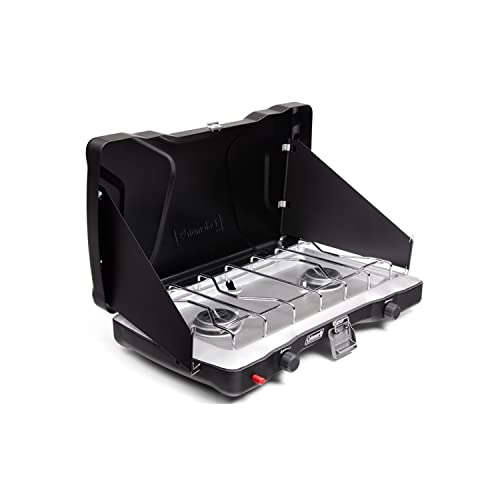
Here is the camping stove we use which is super easy to take with us anywhere and cook up a delicious meal!
Drive through Lamar Valley and soak up the incredible view as you make your way towards our next major stop in Yellowstone: the Grand Canyon.
Grand Canyon of Yellowstone
That’s right, the Grand Canyon. There is a Grand Canyon in Yellowstone National Park! No it isn’t this one:

It’s this one:

The Grand Canyon of Yellowstone was our single favorite stop in all of Yellowstone National Park! Why? Well, a bunch of reasons:
The number 1 reason, the waterfalls! Upper Falls and Lower Falls are in our top 5 most beautiful things we’ve ever seen. Upper Falls is a 109 foot waterfall that is gushing over a cliff, feeding a pool and river that leads to the much more beautiful Lower Falls.
Lower Falls is a 300 foot behemoth that pumps, and we mean PUMPS, water. It is the largest volume waterfall in the Rocky Mountains!
-
Upper Falls in the Grand Canyon of Yellowstone National Park, Wyoming -
Upper Falls in the Grand Canyon of Yellowstone National Park, Wyoming -
Lower Falls in the Grand Canyon of Yellowstone National Park, Wyoming -
Lower Falls in the Grand Canyon of Yellowstone National Park, Wyoming


Number 2, the canyon itself. The canyon is 24 miles long and over 1,000 feet tall on each side. If you look closely you can see bubbling geysers blasting through the rocks and flowing down to feed the river as well.
There are so many incredible colors from this site it will leave you speechless. The canyon itself is a mixture of red, white, yellow, and orange and looks as if it were formed by a master potter. Well, I suppose it was: Mother Nature!
-
Viewpoint of the Grand Canyon of Yellowstone National Park, in Wyoming -
Viewpoint of the Grand Canyon of Yellowstone National Park, in Wyoming -
Viewpoint of the Grand Canyon of Yellowstone National Park, in Wyoming -
Viewpoint of the Grand Canyon of Yellowstone National Park, in Wyoming


Along the horizon, you’ll see the huge mountain range jutting into the sky. The valley before you is many shades of green with all the vegetation between you and those mountains. And in the sky, bright shade of blue spotted with puffy white clouds. All of this makes for a visual masterpiece that will leave your jaw on the floor for the entire time you’re at the Grand Canyon of Yellowstone.
Reason number 3 is all of the different viewpoints and trails along the Grand Canyon of Yellowstone. When we went, there were 7 open stops and we did every single one of them. Note: Uncle Tom’s Trail was closed when we were there, but if it’s open on your trip you have to do it. It looked incredible!
- North Rim: Brink of Lower Falls, Red Rock Trail, Lookout Point, Grand View Point, Inspiration Point
- South Rim: Upper Falls Viewpoint, Uncle Tom’s Trail (closed when we went), Artist’s Point
Our 2 favorite stops of all 7 were Artist’s Point and Brink of Lower Falls. Both have unique and incredible views of Lower Falls and the surrounding area of the park.
At the brink, you will literally be at the point where Lower Falls flows over the cliff and into the Grand Canyon before you. The best part is that on a sunny day there will be a rainbow formed right as the water mists over the falls!
-

View from the Brink of Lower Falls in Yellowstone National Park Wyoming. On a sunny day you will see a beautiful rainbow! -
View from the Brink of Lower Falls in Yellowstone National Park Wyoming. An absolute MUST STOP on your trip! -
View from the Brink of Lower Falls in Yellowstone National Park Wyoming. An absolute MUST STOP on your trip! -
View from the Brink of Lower Falls in Yellowstone National Park Wyoming. An absolute MUST STOP on your trip!


Artist point is very famous in the Grand Canyon of Yellowstone for being the most beautiful viewpoint. That’s why all the artist go there! So you should too…
-
The Grand Canyon of Yellowstone National Park, Wyoming -
Lower Falls in the Grand Canyon of Yellowstone National Park, Wyoming -

The view from Artist Point in Grand Canyon of Yellowstone National Park, Wyoming! An absolute MUST STOP during your trip!

Day 5
Grand Prismatic Springs
Day 5 we are starting at the West entrance of Yellowstone. We actually start in West Yellowstone which is a city in Idaho! We were extremely excited about day 5 because of the pictures that we saw on Instagram of the Grand Prismatic Springs!
The Grand Prismatic Springs is pretty unbelievable in account of its size and the sheer number of colors in it. It is named correctly, it is basically a liquid prism!
To get to Grand Prismatic Springs we started at the Fairy Falls trailhead. This trail has a hike up a hill which has an overlook over the biggest prismatic spring you’ll ever see in your life.
There are a few reasons to do the overlook hike instead of the boardwalk around the springs. First off, the view is better in our opinion from the overlook. Second, there’s much less people. The boardwalk at the springs itself is packed full of everyone from tourists to locals, campers to tour buses, even a few motorcyclists!
-
The view from the overlook of Grand Prismatic Spring in Yellowstone National Park, Wyoming -
The view from the overlook of Grand Prismatic Spring in Yellowstone National Park, Wyoming. One of the best things to do on your trip to this national park!


Fairy Falls
Once you’re finished soaking up the blues, reds, yellows, whites and every color under the sun at Grand Prismatic Springs, let’s continue on to Fairy Falls. Fairy Falls is a 200 foot waterfall that makes for a beautiful end to your trip in Yellowstone National Park.
Although we did not see any real fairies there, this place felt like a wonderland all its own. We found that it was very fun sitting in view of Fairy Falls, reminiscing about all of the incredible adventures and unforgettable memories we had in our 5 day tour of Yellowstone National Park.
-
A view of Fairy Falls in Yellowstone National Park, Wyoming. Continue on a short hike from the Grand Prismatic Spring to this waterfall!

Free Camping
We were able to find free campsites outside Yellowstone National Park at every entrance. And if you’ll remember, we went through the South, North, Northeast AND the West Entrance to the park! Free camping at every stop.
We found our free site on iOverlander, the app we use to find free camping in National Forests across the United States and Canada!
Our Gear
When hiking high miles, a good hiking shoe is important to give you support and keep those feet fresh! We absolutely love ours. They are waterproof and get us through the toughest hikes!
Julie: Hiking Boots
Zach: Hiking Boots
The most important thing to remember when you hike: WATER! We love this bladder because it is big enough to get us through long hikes and is very affordable!
While you’re exploring you are going to want to capture these beautiful sites. We use a Canon camera and every photo in this post was taken using that camera.
If you want to get in some of those photos we recommend using a tripod and the timer on your camera to capture the perfect image. Here is the tripod we use!
When hiking in Yellowstone National Park you should carry bear spray and have it easily accessible at all times. We saw a ton of bears during our time here! Although we never felt scared or threatened by them, since these animals can be unpredictable it’s best to have it along! We HIGHLY encourage you to purchase it before you go. It’s way more expensive once you get there.
Our propane camping stove is the best for making delicious and nutritious meals while on the road! We are able to eat healthy meals while traveling rather than zipping through a drive through and making some poor decisions.
Don’t forget the propane for your camping stove!
This is our favorite hiking backpack because we can fit all our camera gear inside and the bottom is a cooler that keeps our lunch cold and fresh!
Just throw this Yeti ice pack in the cooler and you are all set!
Enjoy Yellowstone
We truly hope you enjoyed our 5 day itinerary seeing the best sites that Yellowstone National Park has to offer. We went hiking, swimming, driving, and walking. We saw geysers, springs, pools, rivers, mountains, valleys, waterfalls, canyons, and of course we can’t forget about the wildlife. We saw black bears, coyote, osprey, elk, deer, moose, bison, pronghorn, marmots, and some other crazy birds. And we could’ve seen grizzly bears and wolves, but we didn’t get lucky enough.
If you liked this article please check out some of our other wanderful destinations to National Parks around the United States and more, and pin the below image to save it for later!

I’m really enjoying the design and layout of your website.
It’s a very easy on the eyes which makes it much more pleasant for
me to come here and visit more often. Did you hire out a
developer to create your theme? Excellent work!
They also report that every $1 spent on user experience creates $100 in value.
It’s going to be finish of mine day, however before end I am
reading this impressive piece of writing to increase my
know-how.
When a Proxy Server Matters Plus When It Can Start Across Real
Networks: An Honest Primer From a Non Expert
I should state my limits first, because honesty has to begin there.
I do not sell proxies and I have no insider knowledge of any provider, I hold no
credentials of any kind, and I measured no speeds and ran no benchmarks for these notes.
Everything below comes from public information and careful
reasoning, so use it as a starting point and not as professional
advice.
The Work Behind This Guide
Writing about what a proxy server is honestly was harder than I
expected, because it is tempting to sound more
certain than I really am. I wrote several drafts, rebuilt the structure twice, and deleted every statement that
I could not support with public documentation. I read public networking guidance and deleted anything that sounded like a promise of results,
and I mention this because readers deserve to know how a text was made.
A Go Between for Your Requests
A proxy server is a machine placed between you and a
website that takes your request, sends it on, and returns the reply.
That means the site deals with the proxy and not with you directly, and
this single fact drives most reasons for using
one. I hold no networking qualifications and tried no product here, so these are
simple explanations and not expert guidance, and compare other sources.
The Receptionist Comparison
Picture writing a letter to a company and giving it to
a messenger who puts their own return address on it, so replies reach the messenger first.
The messenger passes the answer on to you, and the company never sees your address, though the messenger knows who you are.
This detail matters because it shows a proxy shifts trust to another party and does
not remove it, so choose the messenger carefully.
Following One Request
With a proxy, your browser or app sends traffic to the proxy address and port first, and the proxy then opens its own connection to the destination. The
site answers the proxy, which receives the data and
relays it to you over your existing connection. This normally takes a fraction of a second, but the extra hop adds
delay, so speed differs between services, and testing helps.
Your Public Address
Every connected device appears to websites through an IP
address, which acts like a street address for network traffic.
Without a proxy the site sees the public IP of your home, office, or mobile network, and
with one it sees the proxy’s address. Sites can still learn your browser,
language, and logged in accounts, so changing the IP is not the same as becoming invisible, and this matters for privacy.
Common Reasons
People use proxies to test how a site looks from other countries, manage business accounts
where allowed, collect public data, check ads, or add control in company networks.
Some uses are routine and harmless and others break site rules
or laws, and the technology does not decide which one you are doing.
I would always read the terms of the websites involved and ask a qualified professional when the legal side is unclear, because the user
is accountable.
Forward Proxies and Reverse Proxies
A forward proxy represents the user in front of clients,
while a reverse proxy represents a website in front of servers, and both relay traffic
for different owners. When people buy a proxy they nearly always mean a forward proxy, yet reverse proxies are everywhere handling
load balancing, caching, and security. Knowing the difference prevents confusion when documents use the word
proxy in two different ways, and it clears up a lot.
Speaking the Right Language
Proxies use different protocols, mainly HTTP for web traffic, HTTPS capable for encrypted tunnels, and SOCKS for many kinds of connections.
Your software must support the proxy’s protocol or the connection will fail with an error that
may not explain why. When buying or configuring, check the protocol and test with a small request before relying
on it, and keep a note of the settings.
Datacenter and Residential Addresses
Datacenter proxies use hosting company addresses and are fast and cheap, while residential proxies use
home connection addresses and resemble ordinary visitors. Mobile proxies
use addresses from cellular networks, and each type has trade offs in price, speed, reliability, and how websites treat the traffic.
No type is always best, and the choice depends on your task, budget, and
the rules of the sites involved, and honest providers will explain this.
Anonymity Levels
A transparent proxy reveals that it is a proxy and may
pass your real IP, an anonymous proxy hides your IP but admits it is a proxy, and an elite proxy tries to appear normal.
These labels are loose and providers use them differently,
so testing beats trusting a label. No proxy hides everything
as browsers, cookies, and behavior may still identify you,
so keep your expectations modest.
Sessions and Changing Addresses
A static proxy keeps one IP address for a long time, while a rotating proxy changes addresses
automatically per request or after a set time.
Static addresses suit stable identity tasks, and rotating ones suit many requests spread across addresses within the rules.
Rotation does not excuse bad behavior, and too many requests can harm a website or get you blocked, so go gently.
Similar but Different
A VPN usually encrypts all device traffic and routes it via a server, while a proxy typically handles
one application’s traffic and may not encrypt it.
Both change the IP websites see but solve different problems,
and a proxy gives finer control for tasks like testing or data collection.
If your goal is general privacy on public networks, a reputable VPN is usually more suitable, though I am no expert and you should research it,
and neither is magic.
Security and Trust
Since a proxy sits in the middle, its operator may see which sites you visit and, without end to end encryption, the content,
so operator trustworthiness is the central security question.
Free services carry extra risk as some add ads, collect data, or
use unwilling devices. Never send passwords, banking details, or private messages through a proxy you do not fully
trust, and prefer encrypted connections, and read the provider’s privacy policy.
Rules That Still Apply
Using a proxy is legal in many countries, but using one for fraud,
bypassing paid access without rights, harassment, or crime remains illegal
and unethical. Websites have terms of service, and breaking them can cause blocks, lost data, or complaints, so
read rules before automating. Because laws vary and I am not a lawyer, consult a
professional, and act with respect.
Red Flags to Notice
Good providers explain where addresses come
from, state clear rules, show transparent pricing,
and offer support, while red flags are unrealistic promises, unclear sourcing, and payment pressure.
Read independent reviews cautiously since
some are paid or fake, and prefer your own small test over rankings online.
Because I tested none I recommend no one, and suggest comparing two or more, and start
small.
Basic Troubleshooting
Typical problems are wrong settings, blocked ports, expired logins,
protocol mismatches, or sites refusing the address, and many can be solved by checking basics one at a time.
Start by confirming the address, port, username, and password, then test
another website, then contact support with exact error messages.
Alter one setting per test to find the cause, and stay calm.
Mistakes Beginners Often Make
A frequent error is trusting free proxy lists,
which are often slow, unreliable, and unsafe, making them
a poor starting point. Another is expecting a proxy to guarantee
anonymity or make any activity safe, when it only changes the visible address.
A third is ignoring site rules and law because the proxy feels like a shield, which can lead to blocks or worse,
and each can be prevented.
A Short Glossary for Beginners
An IP address identifies where traffic comes from, a port
is a numbered entrance on a server, and a protocol is the rule set
machines use to talk. Latency is the delay before data arrives, bandwidth is how much data moves in a
time, and authentication is proving who you
are. These definitions make documentation clearer, and it helps you ask better questions.
Limits of This Guide
I will say it one more time: I am not an expert, I
hold no credentials, and I tested no proxy product for this article.
This article summarizes public information and common sense, and facts like features,
costs, and policies shift constantly, so please verify everything with official sources.
Final Thoughts
A proxy server is simply a middle machine that passes your requests along,
and understanding that one idea makes the rest of the topic much easier.
Thanks for your time, and I hope the work I put into these notes helped.
Hmm it appears like your blog ate my first comment (it
was extremely long) so I guess I’ll just sum it up what I submitted and say, I’m thoroughly enjoying your blog.
I too am an aspiring blog blogger but I’m still new to everything.
Do you have any tips and hints for newbie blog writers? I’d
certainly appreciate it.